
The Bard and the Dolphin
Arion of Lesbos was the most renowned kithara player of his age, a celebrated genius in the court of Corinth. After a triumphant tour of Sicily, where his golden voice won him not just accolades but chests of heavy treasure, he chartered a Corinthian ship for his return. He trusted his countrymen to bring him home, but he soon learned that greed acknowledges no kinship.
Mid-voyage, the deep blue solitude of the Tyrrhenian Sea turned hostile. The crew surrounded the bard, their eyes gleaming with murderous intent. They coveted his gold and offered a grim choice: suicide by the sea or slaughter by the sword. Arion, realizing his fate was sealed, made one final request: to sing a last hymn in his full ceremonial robes. The sailors, amused and eager to hear the world’s greatest master before he died, agreed to the delay.
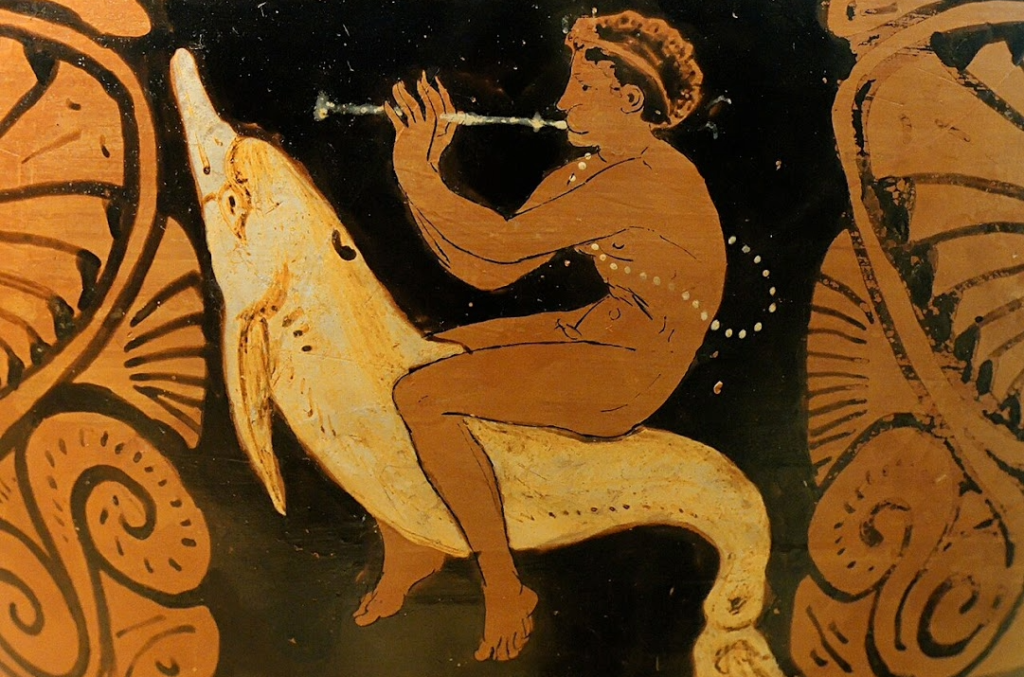
Standing on the tossing prow, clutching his lyre, Arion invoked a high, piercing melody. It was a dithyramb of praise to Apollo, so pure it seemed to calm the whitecaps. The music drifted down through the azure waves, reaching the sensitive ears of the ocean’s wanderers. As the final, trembling note faded into the wind, Arion did not wait for the sailors to strike. With dignity, he leaped into the churning waters.
But the abyss did not swallow him. A dolphin, enchanted by the sorrowful beauty of the music, rose swiftly from the depths. It offered its slick, grey back to the drowning bard. Clinging to the dorsal fin, Arion was carried not by wood and sail, but by nature’s grace. The dolphin sped through the foam, depositing him safely at Taenarum long before the treacherous ship arrived. Arion survived, a living testament that true art can charm even the wild heart of the sea.