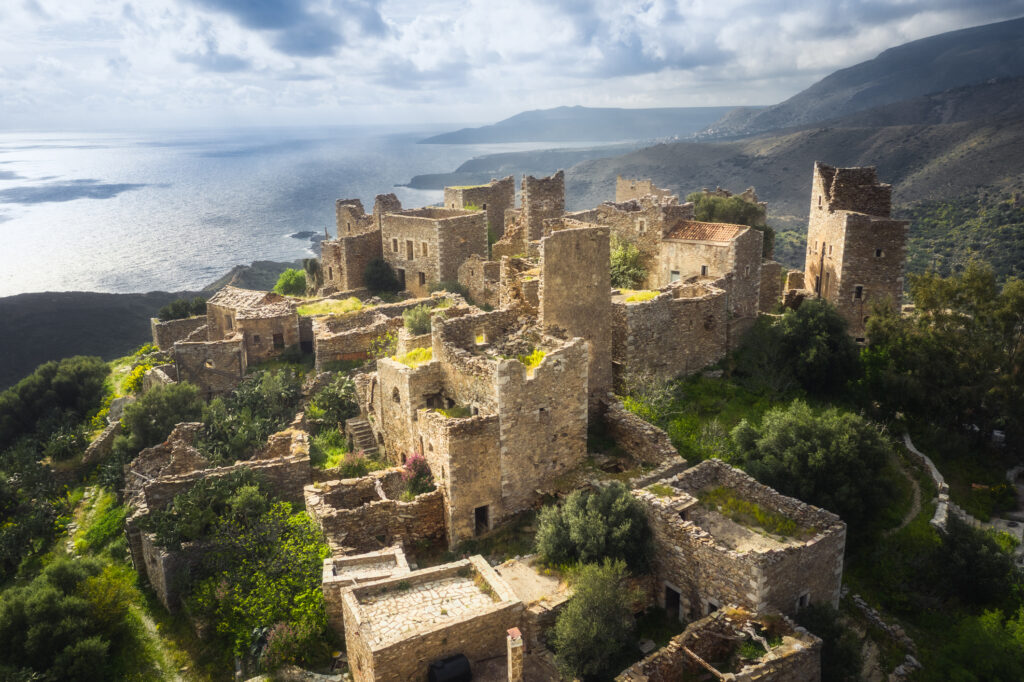
Finding shelter inside stone fortresses
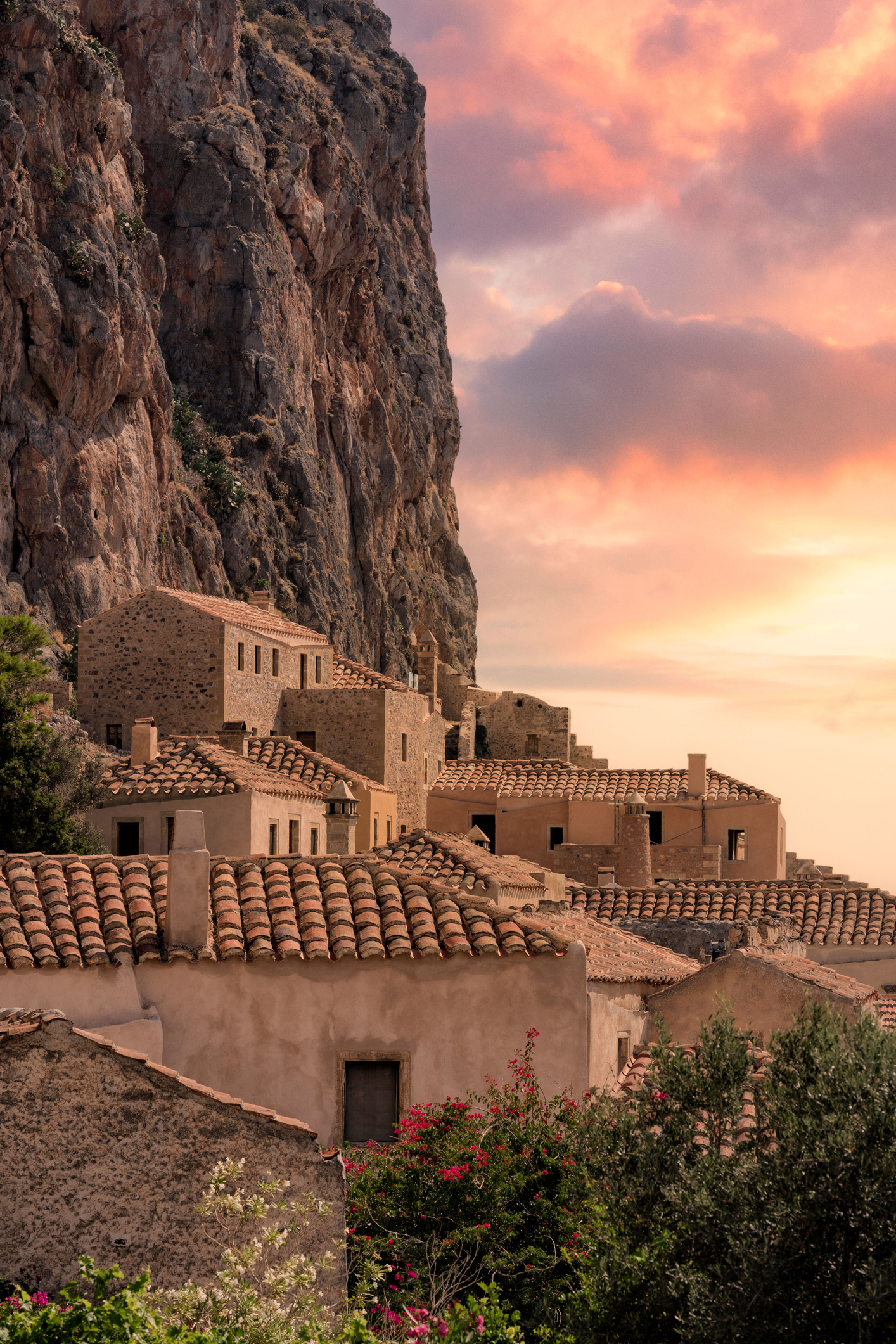
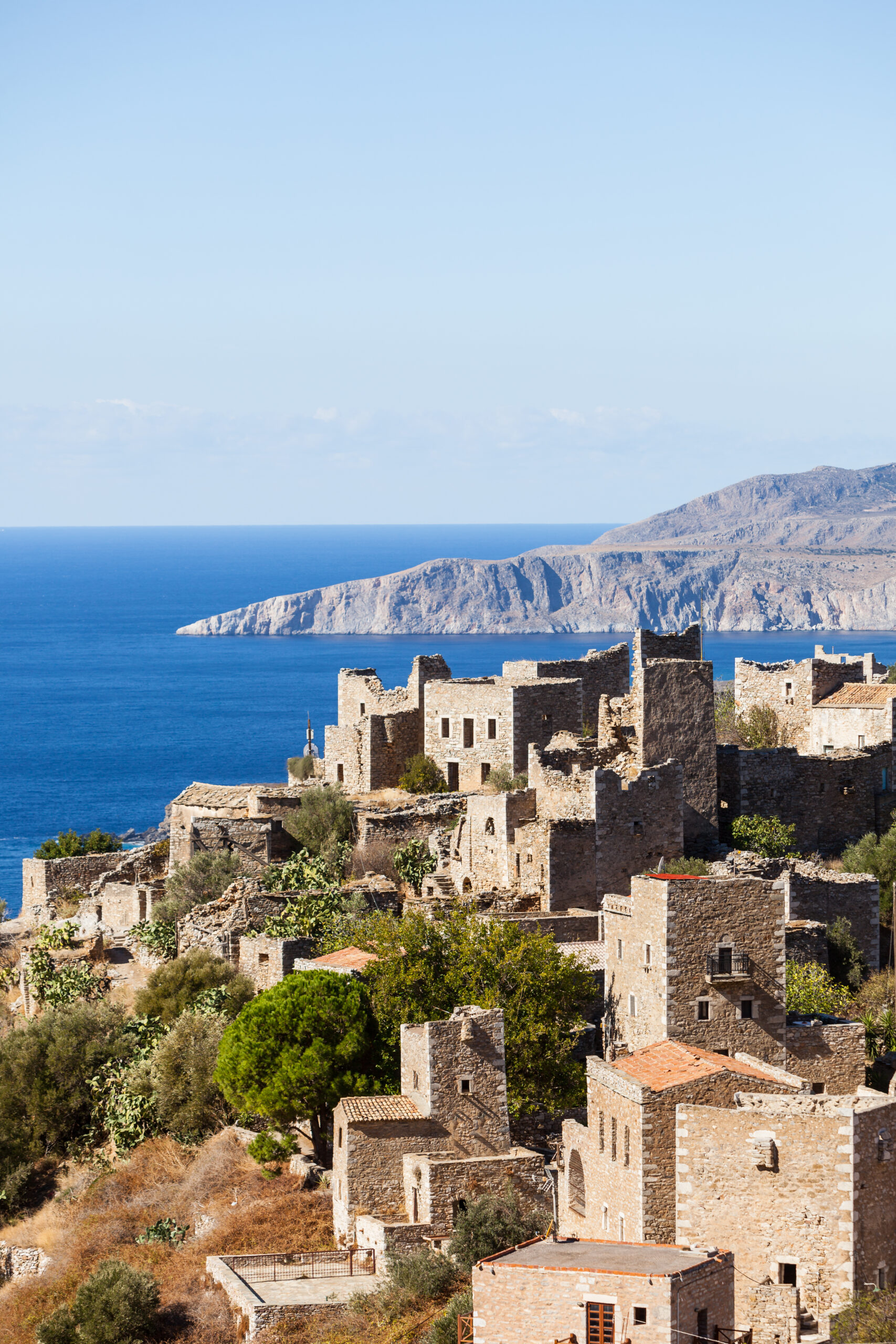
The Deep Mani, the central peninsula of the Peloponnese in Greece, presents a dramatic landscape characterized by arid terrain and rugged coastlines. Within this region, the village of Vathia stands as a prominent example of a unique architectural tradition, appearing less as a conventional settlement and more as a cluster of fortified structures.
Vathia is distinguished by its numerous high, stone defensive towers, which dominate the ridge where the village is situated. These structures served not as traditional dwellings but as family fortresses, a direct response to the region’s historical social dynamics.For centuries, the Mani region in the Peloponnese, was marked by intense family feuds, known as vendettas, often stemming from disputes over land, honor, or resources. These inter-family conflicts necessitated the development of tower-houses, which provided protection during periods of sustained hostility. Families lived in these towers for protection, sometimes for years at a time, shooting at neighbors from slit-like gun loops. The height of a tower often dictated a family’s power and their angle of fire. The village stands today as a ghost town of sorts, a stunning, open-air museum of a society governed by a fierce, uncompromising code of honor that dictated the very shape of their homes.