The Story of Tripodon Street
Tripodon Street, tucked beneath the Acropolis, sits at the heart of Athens’ oldest quarter, the Plaka. Its claim to antiquity rests not on a single date but on a layered vernacular: a street that evolved as Athens did, from ancient walkways to a modern thoroughfare.
The earliest roots of Tripodon trace to Classical-era lanes that threaded between the Acropolis and the ancient Agora. Its name, believed to mean “Three-Door Street” or “Three Entrance Street,” points to a time when aqueducts, shrines, and residences clustered along a network of narrow, rocky lanes. In Hellenistic and Roman times, the area transformed from civic core to a residential and commercial seam, with traders and artisans weaving through its tight passages.
Through the Byzantine and Ottoman centuries, Tripodon absorbed new layers of life. The area remained a living neighborhood, its stone surfaces bearing the patina of daily labor, craft, and hospitality. Shops, inns, and homes adapted to changing rulers and markets, while the street’s compact scale preserved a sense of intimate urban texture—curious visitors peering into courtyards, residents threading between thresholds.
The 19th and 20th centuries brought modernization: widening, repaving, and the introduction of electricity, but Tripodon retained its human scale. It became a conduit for tourism as Athens transformed into a capital of a modern Greek state, with Plaka’s neoclassical facades and stair-stepped lanes drawing painters, scholars, and travelers. Small cafés, souvenir shops, and family-run businesses anchored daily life, while the steep, uneven cobbles testified to centuries of footfall.Today, Tripodon Street remains a living record of Athens’ continuity. Pedestrians traverse the façades of stone houses, neighborhood bric-a-brac shops, traditional eateries, and intimate courtyards. Though tourism has altered its pace, the street preserves a sense of history: a corridor under the Acropolis where layers of Greek, Roman, Byzantine, and Ottoman echoes meet the modern city’s current rhythms. It endures as a corridor of memory and everyday life, a tangible link to Athens’ ancient streetscapes.
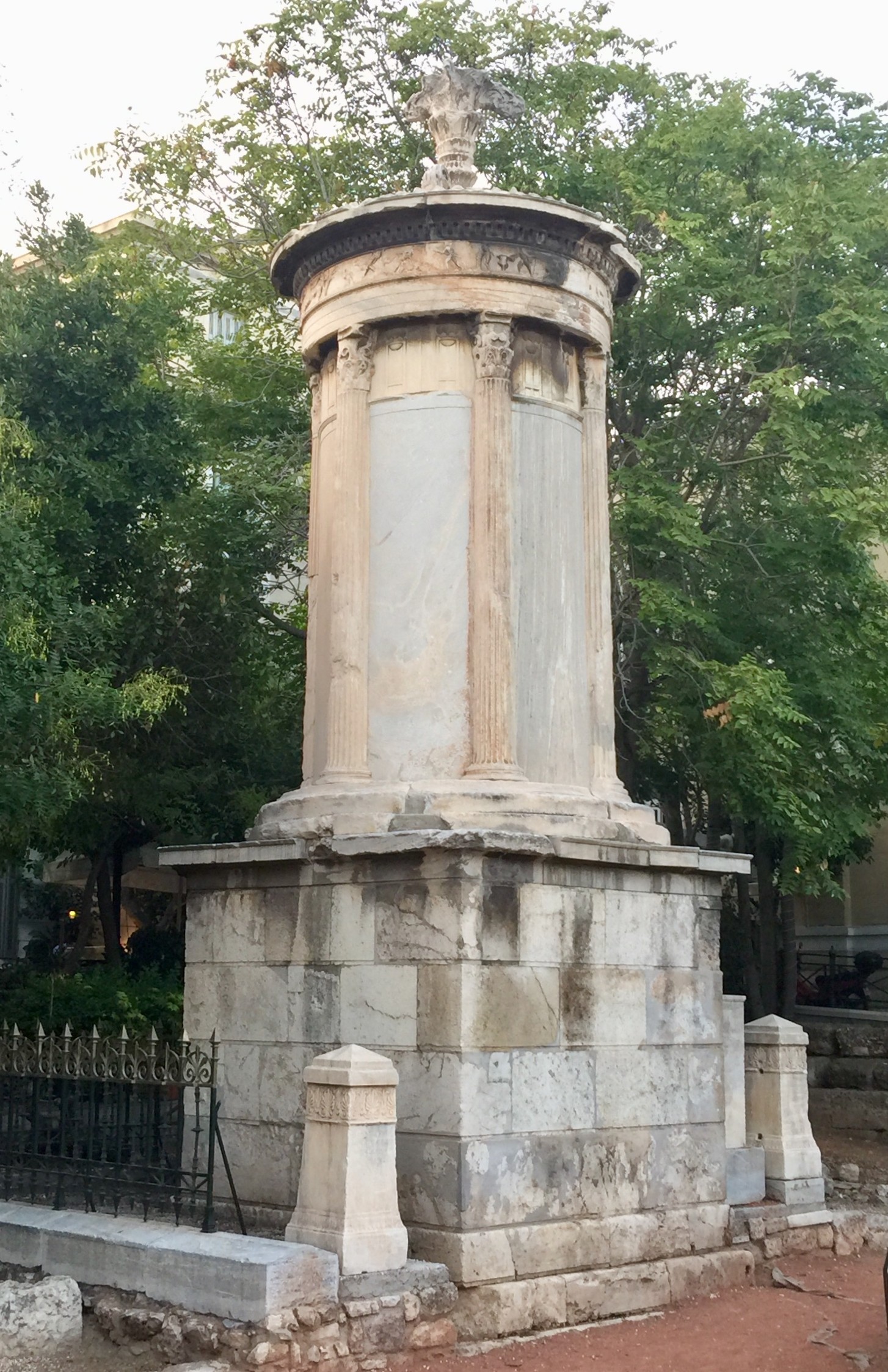
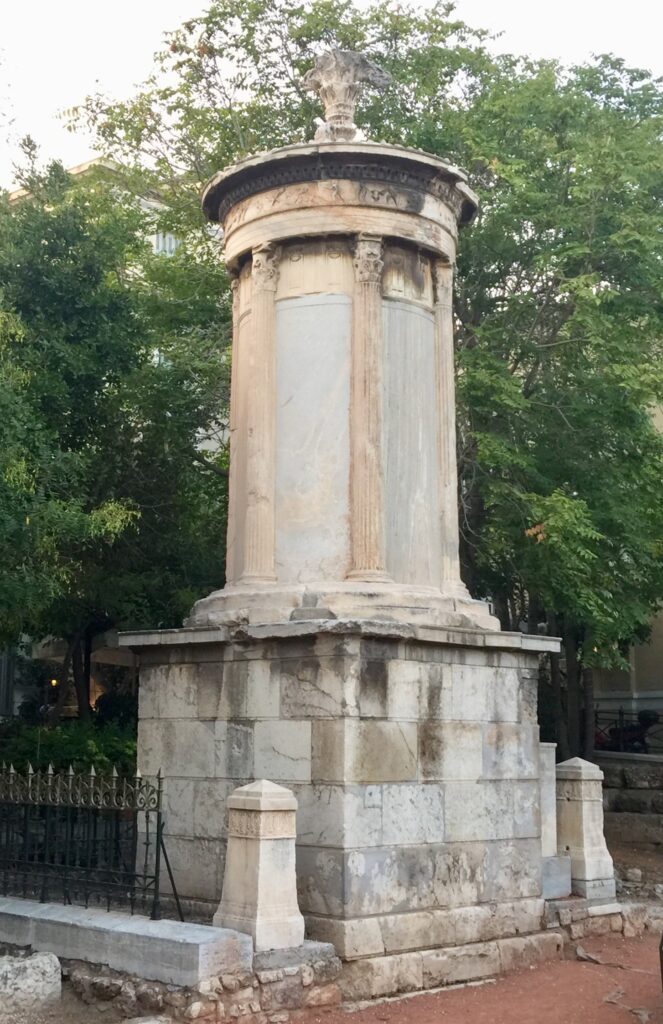
Info for the CaptionThe Choragic Monument of Lysicrates near the Acropolis of Athens was erected by the choregos Lysicrates, a wealthy patron of musical performances in the Theater of Dionysus. It is located at the beginning of Tripodon Street in Athens Placa