The religious ritual of Kolyva
The preparation of kolyva is a solemn Greek Orthodox tradition, rooted deeply in theology and performed with the reverence of a liturgy. The process begins well before the memorial service, usually in the quiet of the kitchen, where boiled wheat berries are spread onto cloth to dry. This primary ingredient is the theological anchor of the ritual; based on scriptural passages, the wheat symbolizes the human body, which, like a seed, must be buried in the earth to rot before it can rise again in resurrection.
Once the wheat is prepared, it is mixed with ingredients that transform the dish into a symbolic map of life and the afterlife. Toasted nuts, such as walnuts and almonds, are added to represent the hardness and difficulties of human existence. These are contrasted with raisins and chopped herbs like parsley, which signify the “green pastures” and the freshness of the eternal life awaiting the soul. Pomegranate seeds are often folded into the mixture, their jewel-like appearance representing the hidden sweetness and splendor of Paradise.
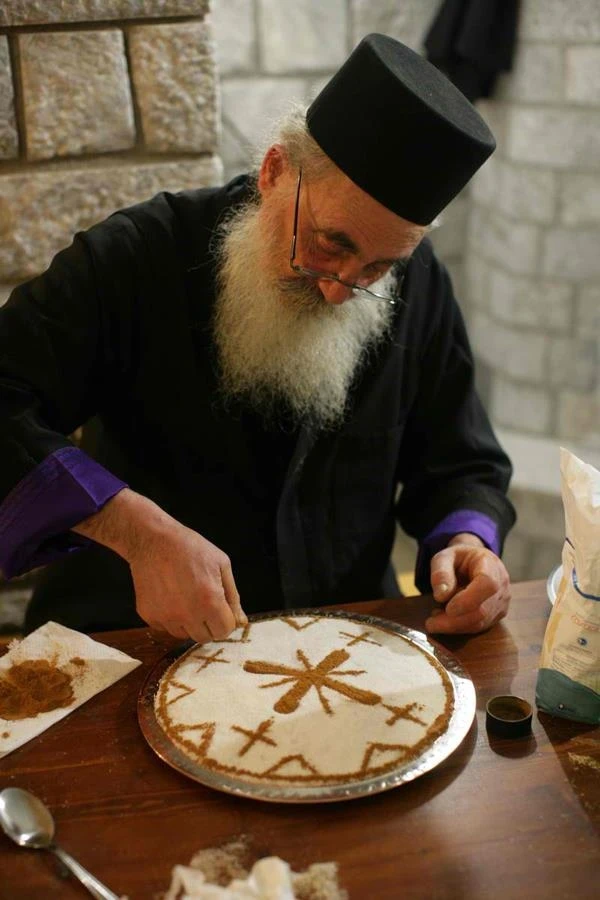
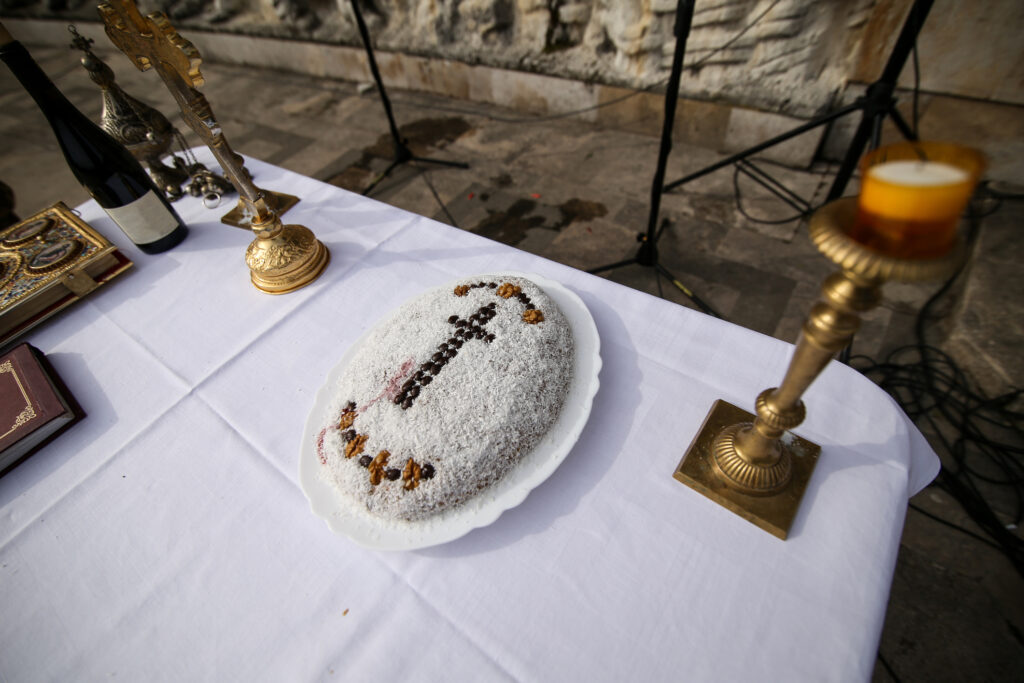
The assembly of the kolyva is architectural in nature. The mixture is shaped into a smooth mound on a platter, explicitly symbolizing the grave itself. This dark earthen mound is then completely obscured by a thick layer of sifted powdered sugar, representing the uncreated light of God and the purity of the soul. Finally, cinnamon or toasted flour is used to stencil a Byzantine cross and the initials of the deceased atop the sugar.
The ritual concludes within the church nave during the memorial service. The tray is blessed by the priest, and the congregation partakes in the food. As the faithful consume the kolyva, reciting “May their memory be eternal,” the act serves as a physical communion between the living and the dead, reaffirming the belief that life, like the wheat, continues after burial.