The Intellectual Capital of the Hellenistic World
Founded by Alexander the Great in 331 BC, Alexandria in Egypt rapidly ascended to become the preeminent cultural and intellectual center of the Hellenistic Age under the Ptolemaic dynasty. Its strategic location at the mouth of the Nile, combined with ambitious royal patronage, transformed it into a beacon of knowledge and commerce.
The city’s most renowned institution was the Library of Alexandria, part of a larger research institution known as the Mouseion (Temple of the Muses). Housing an unparalleled collection of scrolls, estimated in the hundreds of thousands, the library attracted scholars, poets, and scientists from across the Greek world and beyond. Intellectuals like Euclid (geometry), Eratosthenes (geography and circumference of the Earth), and Aristarchus (heliocentric theory) conducted their groundbreaking work within its confines.
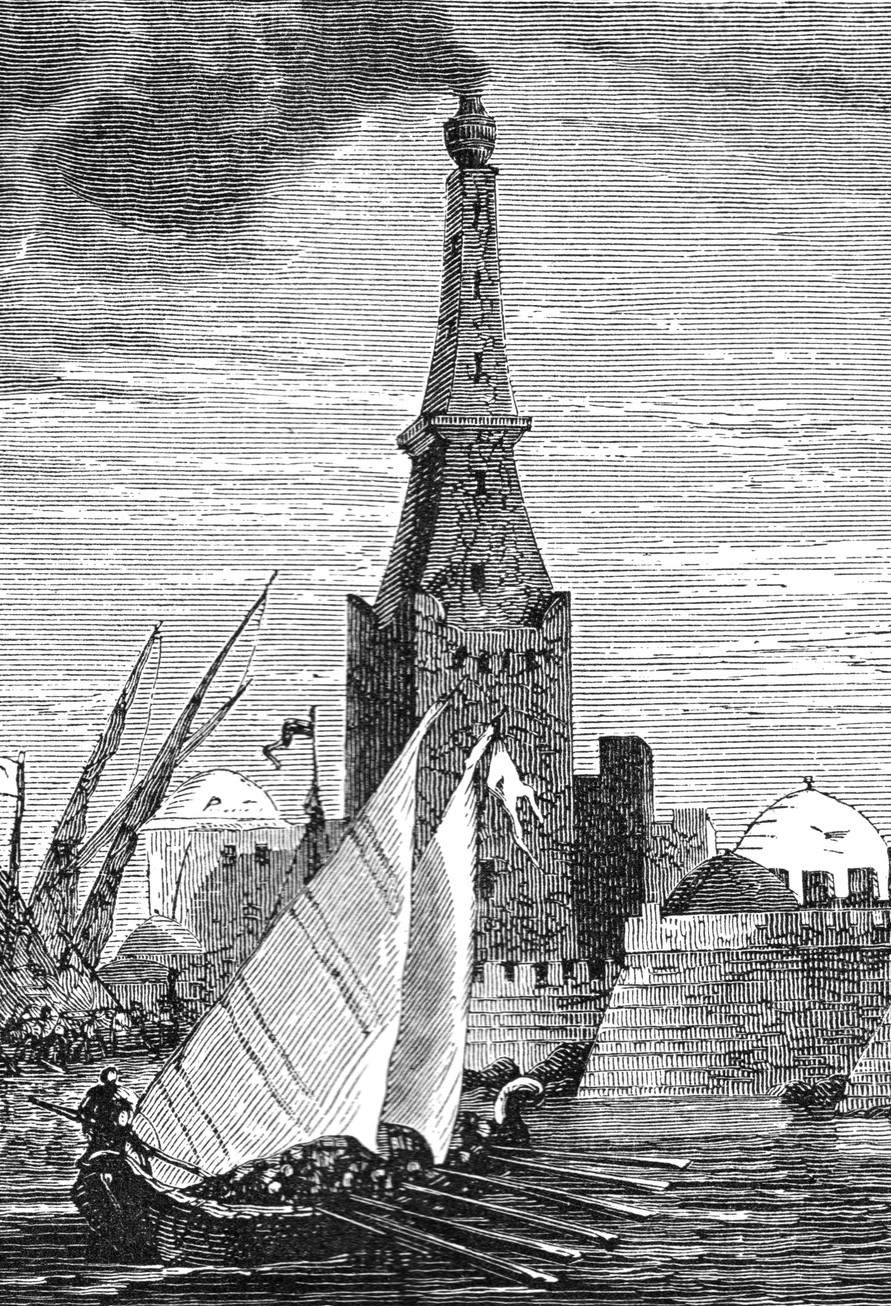
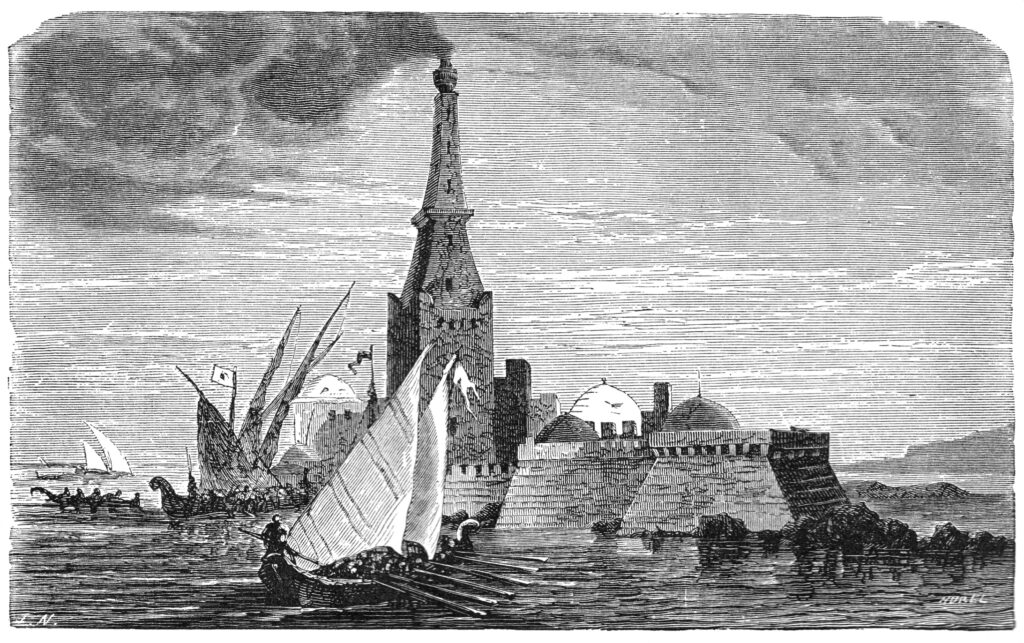
Equally iconic was the Lighthouse of Alexandria, the Pharos, one of the Seven Wonders of the Ancient World. Standing over 100 meters tall, it guided ships into the bustling harbor, symbolizing the city’s global reach and engineering prowess. Alexandria’s blend of Greek and Egyptian cultures, its advanced urban planning, and its commitment to learning established a lasting legacy as a crucible of ancient knowledge and a testament to Hellenistic ambition.