A Tale of Strength and Ingenuity
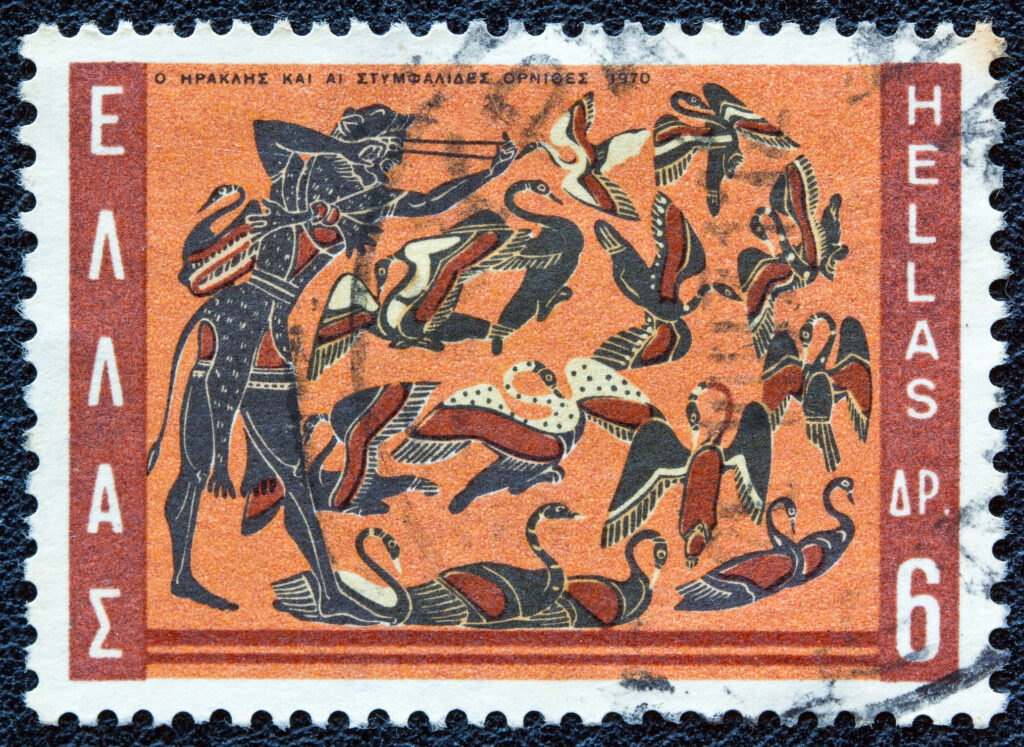
The myth of Hercules and the Stymphalian Birds is one of the fascinating tales from Greek mythology that illustrates Hercules’ strength, bravery, and resourcefulness as part of his Twelve Labors. The Stymphalian Birds were a fearsome breed of man-eating birds with metallic beaks and wings that could shoot arrows. They inhabited the Stymphalian Marsh in Arcadia, where they created havoc, attacking local villagers and consuming livestock.
The challenge of defeating the Stymphalian Birds was assigned to Hercules by King Eurystheus as the sixth labor. Hercules approached this task with both physical might and clever strategy. A key part of the myth involves the use of a special tool provided to him by the goddess Athena, who gave him a pair of bronze castanets or a rattle. This instrument was intended to scare the birds into flight.
Once the birds took to the sky, Hercules demonstrated his exceptional archery skills, using his trusty bow and arrows to shoot them down. The arrows were said to have been gifted by the god Apollo, enhancing their lethality. The battle between Hercules and the Stymphalian Birds is often seen as a testament to his ingenuity; instead of relying solely on brute force, he utilized the environment and tools at his disposal.
Ultimately, Hercules was successful in driving away or killing the birds, thereby freeing the people of Stymphalos from their tyranny. The myth not only highlights Hercules’ physical capabilities but also emphasizes the importance of intelligence and strategy in overcoming challenges. Hercules completed this labor and moved on to face further trials, solidifying his status as one of mythology’s greatest heroes.