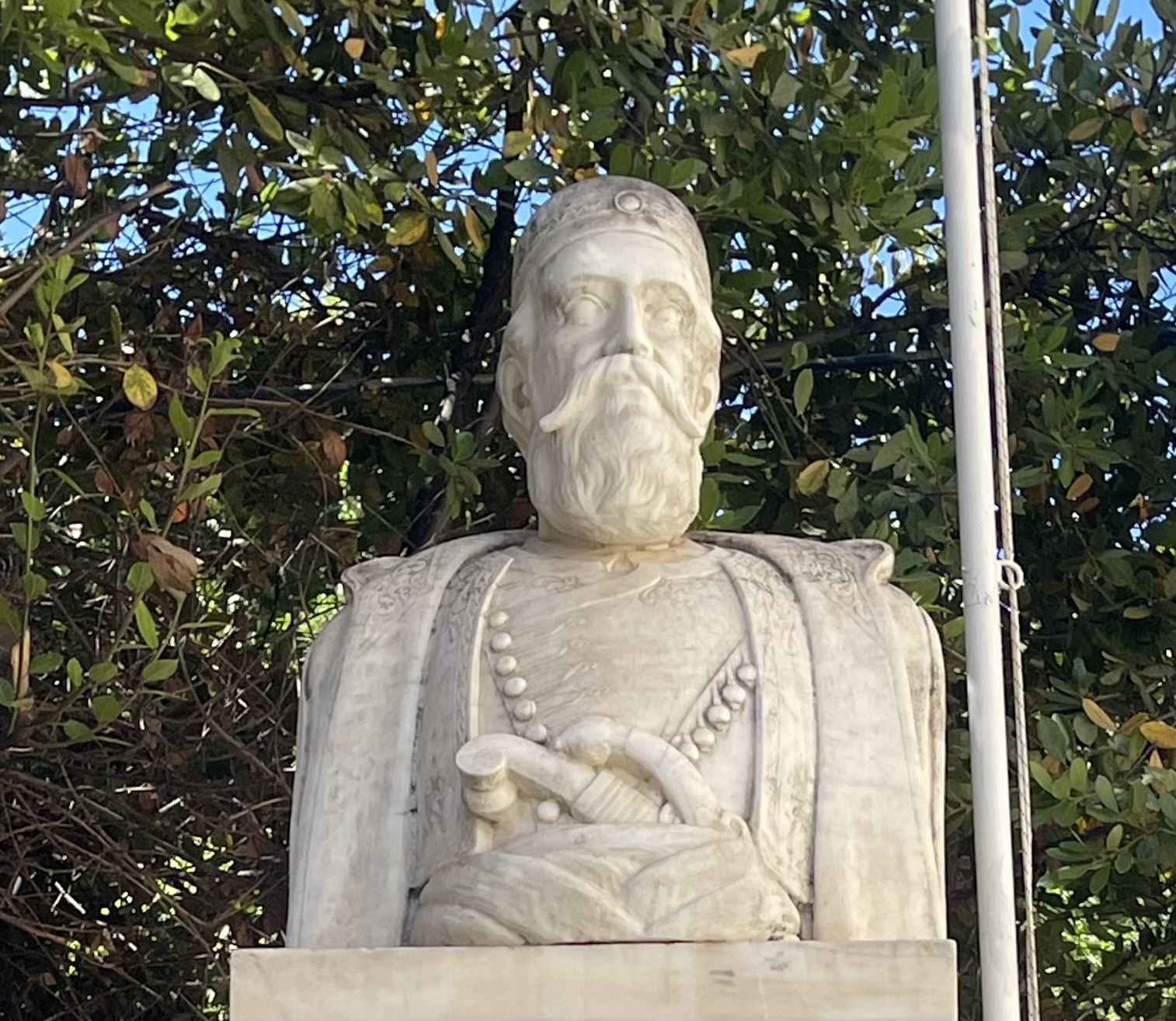
The Wealthy Merchant Who taught courage
Ioannis Vlahos, remembered by history as Daskalogiannis, was a pivotal figure in the 18th-century Greek struggle for independence. Born around 1722 in Anopolis, a village in the rugged Sfakia region of Crete, he was not a soldier by trade but a wealthy shipowner and merchant. His nickname, Daskalogiannis (John the Teacher), was a mark of respect for his education, likely acquired in Italy, and his knowledge of foreign languages—a rare distinction in rural Crete at the time.
His defining accomplishment was the organization and leadership of the 1770 revolt against Ottoman rule, known as the Orlov Revolt. While Sfakia enjoyed a degree of semi-autonomy due to its inaccessible terrain, the region still suffered under Ottoman taxation and restrictions. Daskalogiannis believed the timing was right for a full uprising. He was heavily influenced by Russian agents who, under the direction of Catherine the Great, promised naval support to the Greeks to open a second front against the Ottoman Empire.
Trusting these assurances, Daskalogiannis used his personal fortune to purchase arms, ammunition, and supplies. He united the often-fractious clans of Sfakia, convincing them to challenge the might of the Sultan. In the spring of 1770, the rebellion began successfully, with Daskalogiannis’s forces liberating the province of Sfakia and pushing back local Ottoman garrisons.
However, the rebellion was ultimately doomed by a lack of external support. The promised Russian fleet, engaged in operations elsewhere in the Aegean, never arrived to secure the Cretan coast. Without naval artillery or reinforcements, the rebels were isolated. The Ottoman administration responded with overwhelming force, sending an army of approximately 40,000 troops to crush the uprising.
Recognizing that his forces were vastly outnumbered and that his people faced annihilation, Daskalogiannis chose self-sacrifice over continued bloodshed. He voluntarily surrendered to the Pasha in Heraklion, hoping his capitulation would secure amnesty for the people of Sfakia. Unfortunately, the Ottomans did not honor this implicit bargain. On June 17, 1771, Daskalogiannis was publicly executed in Heraklion. He was tortured to death—skinned alive—a brutal act intended to terrorize the population.
Despite the revolt’s failure, Daskalogiannis’s legacy endured. He is celebrated not for military victory, but for his willingness to risk his immense privilege for the cause of liberty. His revolt is viewed by historians as a crucial precursor to the successful Greek War of Independence that began fifty years later in 1821.