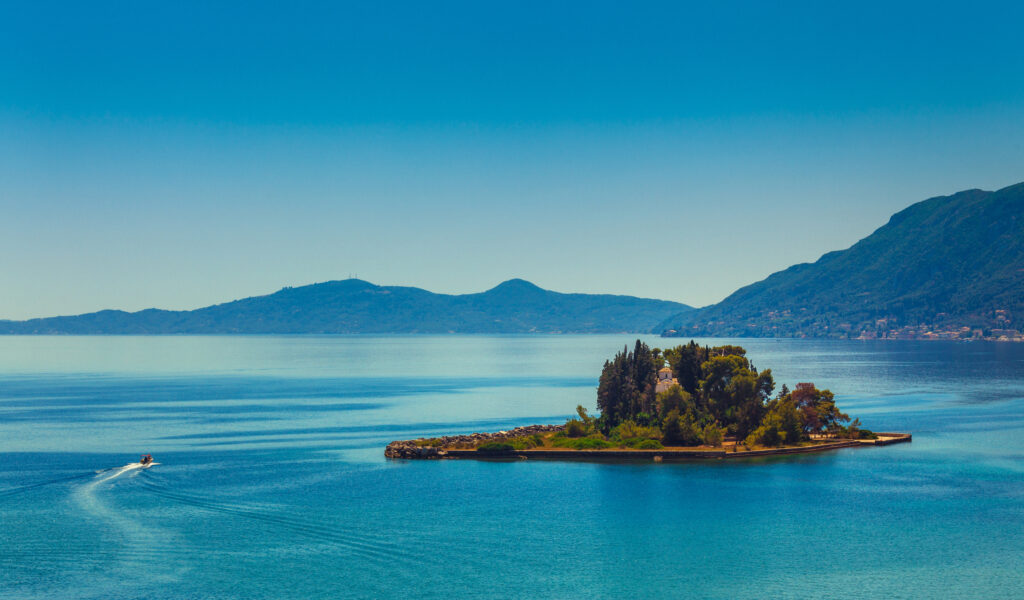
The History and Myth Behind Corfu’s ‘Mouse Island’
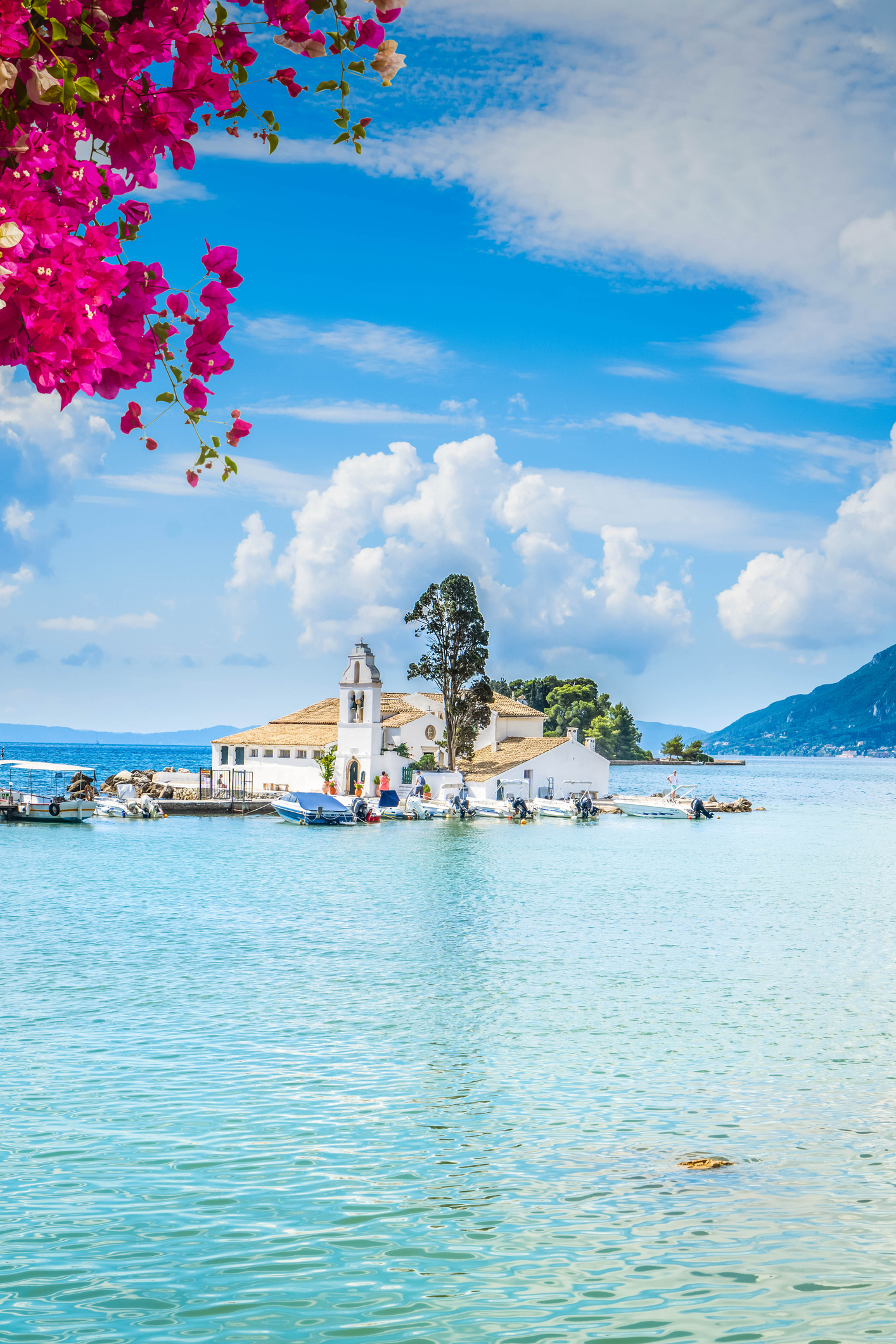
Located just off the coast of Kanoni, Corfu, the islet of Pontikonisi—commonly known as “Mouse Island”—occupies a significant place in both local geography and Greek cultural history. While visually defined by its dense vegetation and small stature, the island’s background is a mix of established religious history and persistent mythological tradition.
According to local legend derived from Homer’s Odyssey, the island’s origins are supernatural. The myth suggests that Pontikonisi is actually a Phaeacian ship turned to stone. The narrative states that after the Phaeacians escorted Odysseus back to Ithaca, the sea god Poseidon, angry at the assistance given to the hero, struck the returning vessel. The ship was instantly petrified, creating the rock formation visible today. This story remains a central part of the island’s identity for tourists and locals alike.
From a historical perspective, the island’s significance is anchored by the Byzantine chapel of Pantokrator, which sits at the center of the landmass. Constructed in the 11th or 12th century, the monastery is a key example of religious architecture from the period. For centuries, it functioned as an active religious site. Historical records indicate that the location was a point of interest for European royalty in the 19th century; both Empress Elisabeth of Austria and Kaiser Wilhelm II visited the chapel during their frequent stays on Corfu, leaving behind commemorative plaques that are still preserved within the structure.
Geographically, the island is situated near the Chalikiopoulos Lagoon and acts as a natural breakwater. Its name, “Mouse Island,” is attributed to the white stone staircase that winds up to the monastery, which, when viewed from above, resembles a mouse’s tail.
Today, Pontikonisi is uninhabited and protected as a natural and historical landmark. The monastery celebrates its feast day on August 6th, the Transfiguration of the Savior, which is the only time large crowds gather on the islet. For the rest of the year, access is limited to small tourist boats from the Kanoni pier, maintaining the site as a preserved monument rather than a commercial hub.